Celik earns Google Academic Research Award to study deceptive monetization in socio-technical systems
01-27-2026
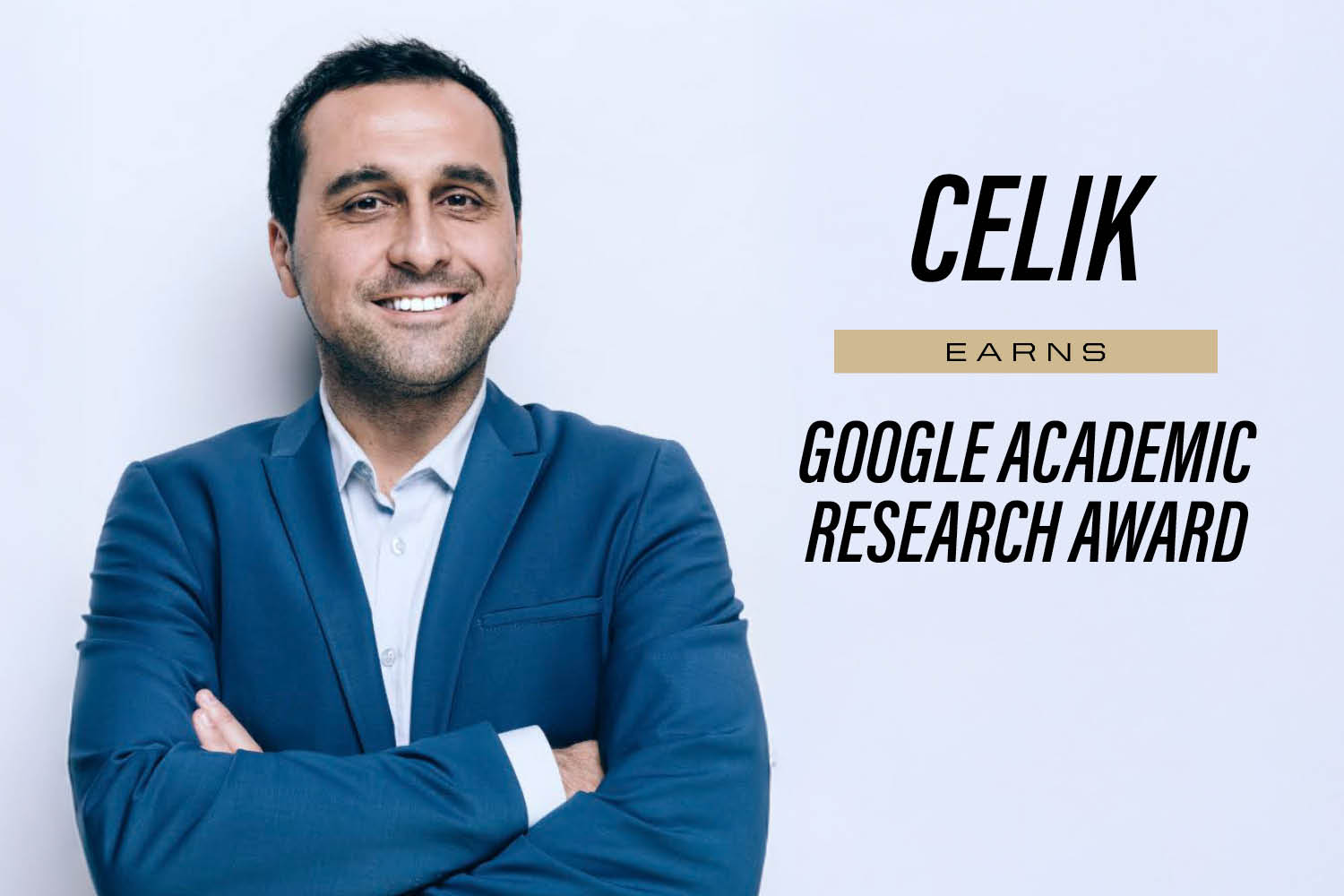 Z. Berkay Celik, associate professor of computer science (photo by Brian Powell)
Z. Berkay Celik, associate professor of computer science at Purdue University, has received a 2025 Google Academic Research Award to support his work on platform security and deceptive monetization in socio-technical systems.
The Google Academic Research Awards program recognizes faculty conducting innovative research aligned with Google’s mission and supports collaborations between academic researchers and Google scientists.
Celik’s research focuses on emerging forms of deceptive monetization in socio-technical systems; platforms where technical infrastructure, automated algorithms, and human social behavior intersect. These systems include digital ecosystems in which creators, audiences, and financial incentives interact at scale.
As deceptive actors increasingly leverage generative artificial intelligence, these platforms face new and rapidly evolving threats. Such actors use generative AI to create synthetic videos of public figures to promote fraudulent activities, deploy large language model–powered bots that simulate realistic viewer engagement and comments, and mass-produce AI-generated content designed to evade traditional moderation mechanisms.
The project conceptualizes deceptive monetization as a two-part problem: how deceptive tactics emerge within creator communities and how those tactics manifest as measurable operational footprints on the platform itself. Celik’s team will monitor online creator communities where new monetization abuse strategies are developed and shared. By extracting and clustering these strategies, the research will produce a dynamic taxonomy organized by mechanism, intent, and threat level.
The project will then connect these community-level insights to observable platform signals, such as recurring AI prompt templates used to generate fraudulent content. Linking these two perspectives enables earlier, predictive detection of deceptive activity before it reaches a significant scale or causes widespread harm.
“This work aims to shift platform security from reactive enforcement to proactive detection,” Celik said. “By understanding how deceptive monetization strategies form and propagate, we can better anticipate and mitigate abuse enabled by generative AI.”
The Google Academic Research Awards (formerly the Research Scholar Program and Google Faculty Research Awards) provide unrestricted gifts to support world-class academic research and foster engagement between Google researchers and the broader research community.
About the Department of Computer Science at Purdue University
Founded in 1962, the Department of Computer Science was created to be an innovative base of knowledge in the emerging field of computing as the first degree-awarding program in the United States. The department continues to advance the computer science industry through research. U.S. News & World Report ranks the department No. 16 and No. 19 overall in undergraduate and graduate computer science, respectively. Graduates of the program can solve complex and challenging problems in many fields. Our consistent success in an ever-changing landscape is reflected in the record undergraduate enrollment, increased faculty hiring, innovative research projects, and the creation of new academic programs. Learn more at cs.purdue.edu.