Zhang earns NSF Award to advance AI decision-making with discrete data
01-21-2026
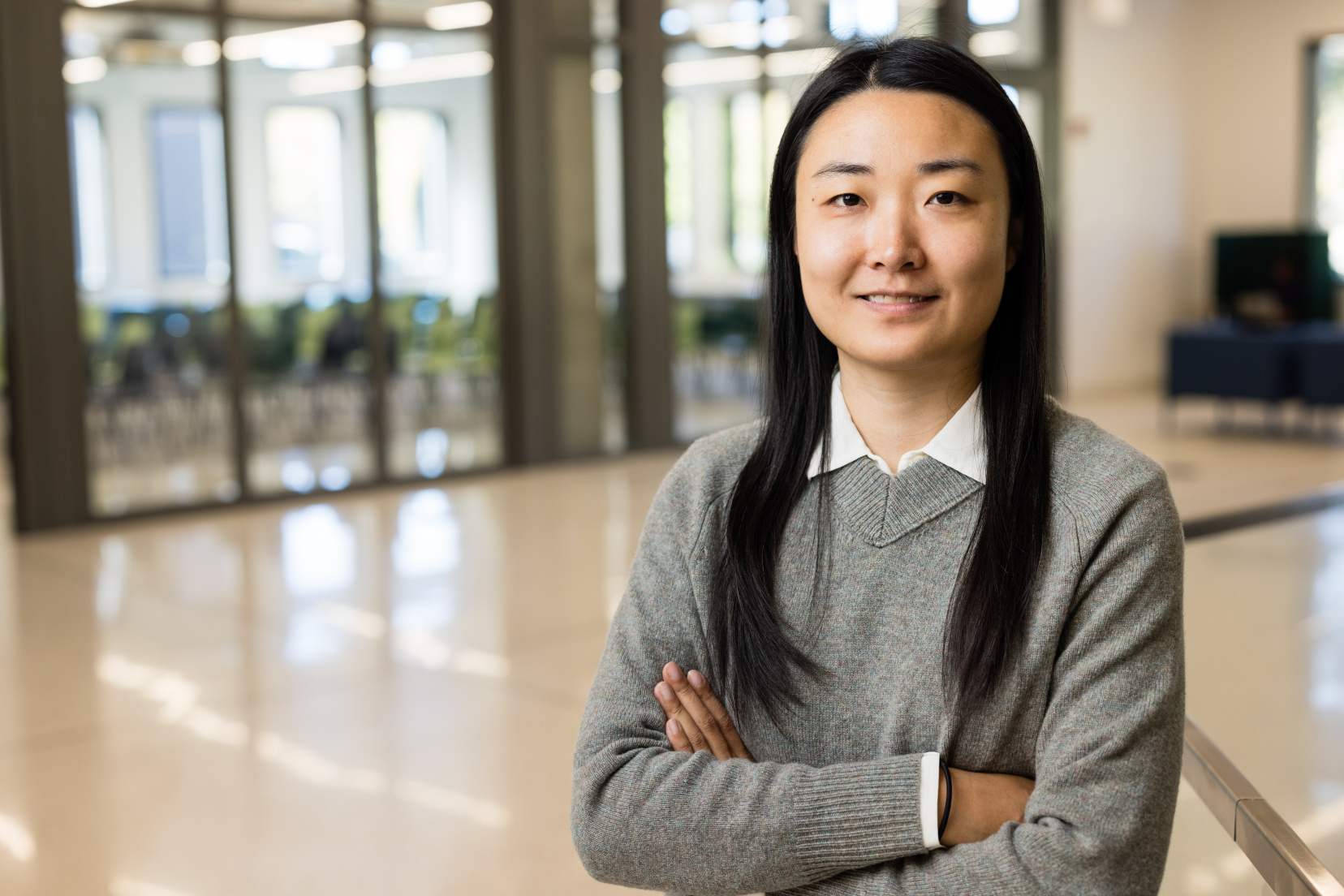
Ruqi Zhang, assistant professor of computer science at Purdue University
Ruqi Zhang, assistant professor of computer science at Purdue University, has received a National Science Foundation (NSF) Small Award from the Division of Information and Intelligent Systems (IIS), Robust Intelligence (RI) program to support research on robust decision-making and sampling methods for discrete data.
Many artificial intelligence and data science applications rely on discrete data structures such as text, graphs, sequences, networks, and molecular representations. While recent advances have improved sampling methods for continuous problems, efficiently handling discrete systems remains a significant challenge due to their complex and combinatorial nature. These limitations affect the reliability and scalability of machine learning systems used in scientific computing and AI applications.
Zhang’s project will develop new sampling algorithms that are faster, more scalable, and more statistically reliable for discrete settings. The research aims to establish stronger theoretical foundations for discrete sampling while translating those insights into practical algorithms that can be used in real-world AI systems.
“Sampling is a fundamental tool behind technologies such as generative AI, language models, and scientific simulations,” Zhang said. “Discrete problems, including text, graphs and molecular structures, remain much harder to handle efficiently. This work seeks to close that gap by improving both the theory and practice of discrete sampling.”
The advances from this research are expected to support the development of more trustworthy AI systems, improve scientific simulations and enable more controllable generative models in application areas such as drug discovery, recommendation systems, and natural language processing.
The NSF award supports Zhang’s research program, including salary support, graduate research assistants, computing resources, and travel. The project will also provide research opportunities for both Ph.D. and undergraduate students at Purdue.
“What excites me most is the opportunity to make progress on a long-standing challenge in the field,” Zhang said. “By rethinking how sampling works in discrete systems, we hope to open new directions for AI and scientific discovery.”
Zhang emphasized that Purdue’s research environment is a strong foundation for the work. “Purdue offers a robust ecosystem for AI research, including world-class faculty, high-performance computing resources, and a culture that supports both foundational research and impactful applications.”
The project is supported by the National Science Foundation under Award No. 2508145.
About the Department of Computer Science at Purdue University
Founded in 1962, the Department of Computer Science was created to be an innovative base of knowledge in the emerging field of computing as the first degree-awarding program in the United States. The department continues to advance the computer science industry through research. U.S. News & World Report ranks the department No. 16 and No. 19 overall in undergraduate and graduate computer science, respectively. Graduates of the program are able to solve complex and challenging problems in many fields. Our consistent success in an ever-changing landscape is reflected in the record undergraduate enrollment, increased faculty hiring, innovative research projects, and the creation of new academic programs. Learn more at cs.purdue.edu.